
Today, November 25, marks the start of the 16 Days of Activism against Gender-Based Violence. A girl should be able to go for a run without fear of harassment or violence and at Free to Run, we're recognizing the ways women and girls use running to create change. Because why should anyone else get to decide whether and where a girl can run?
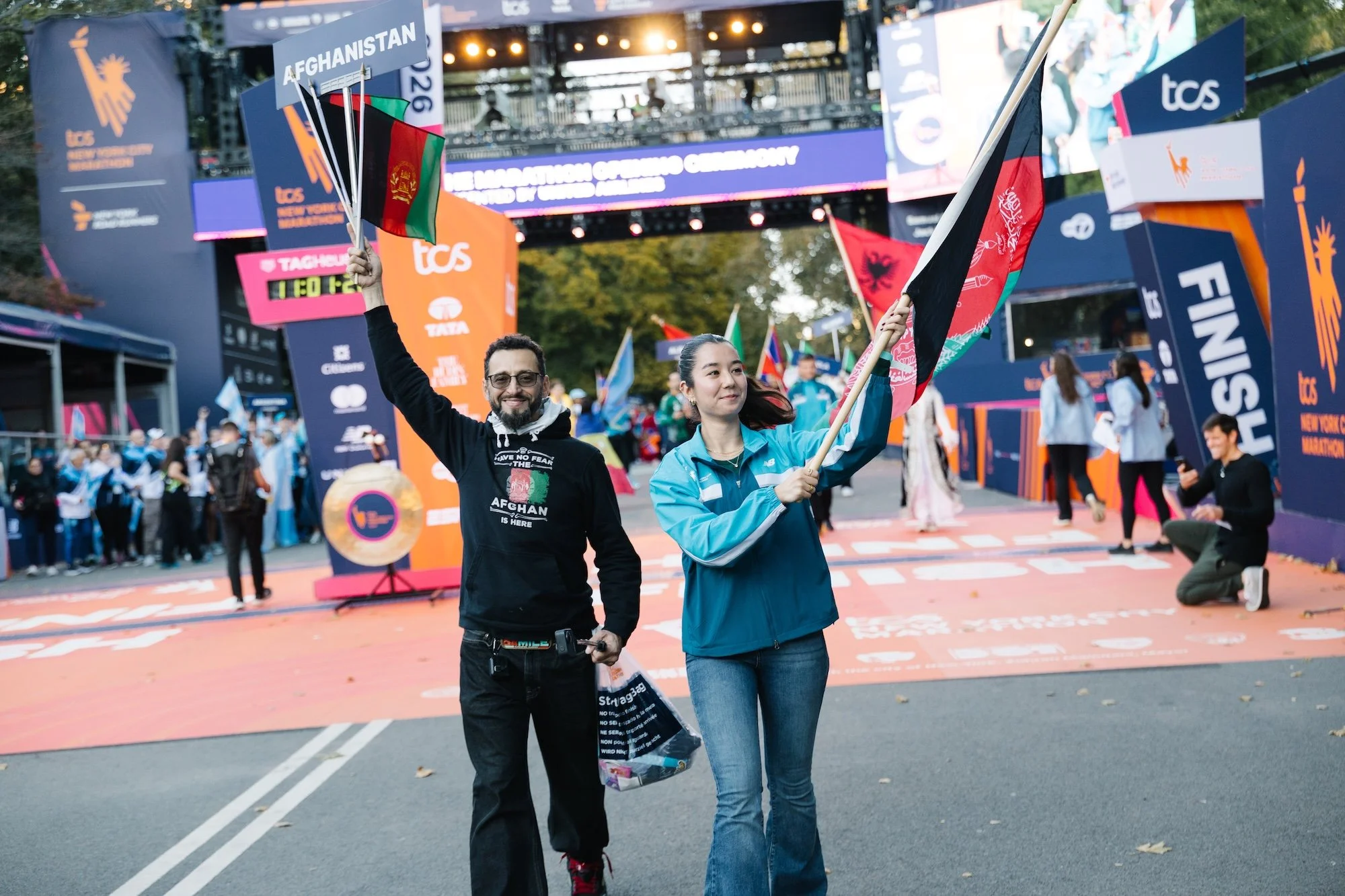
Last year, Free to Run Ambassador Danish Hussain Yar tuned in to watch the New York City Marathon and saw two men carry Afghanistan's flag. She was disappointed not to see Afghan women represented but in 2026 that all changed - when she carried the flag herself.
“Bearing our colorful Afghan flag was one of the most empowering moments of my life.”
Danish was 14 when she first heard of Free to Run in Afghanistan. Her sister joined the program through school, but Danish was too young at the time. She dreamed of running too but it was only years later, when she was 20 years old, that she was free to run outside for the first time.
When the Taliban returned to power in 2021, Danish was 17. She spent a year confined to her home when women were banned from education, from sport, from going outside without a male guardian. During this time, she learned that her mother, once an engineering student, had also been prevented from completing her studies by the Taliban two decades earlier.
Eventually, Danish found a scholarship that allowed her to escape Afghanistan - first to continue her studies in Bangladesh, and then eventually at Cornell University in the United States. She is now writing a children's book about her experience running the New York City Marathon.
"I hope that somewhere, on the other side of the world, a little girl who shares my story will see someone who looks like her running a marathon and believe that she can one day do it too."
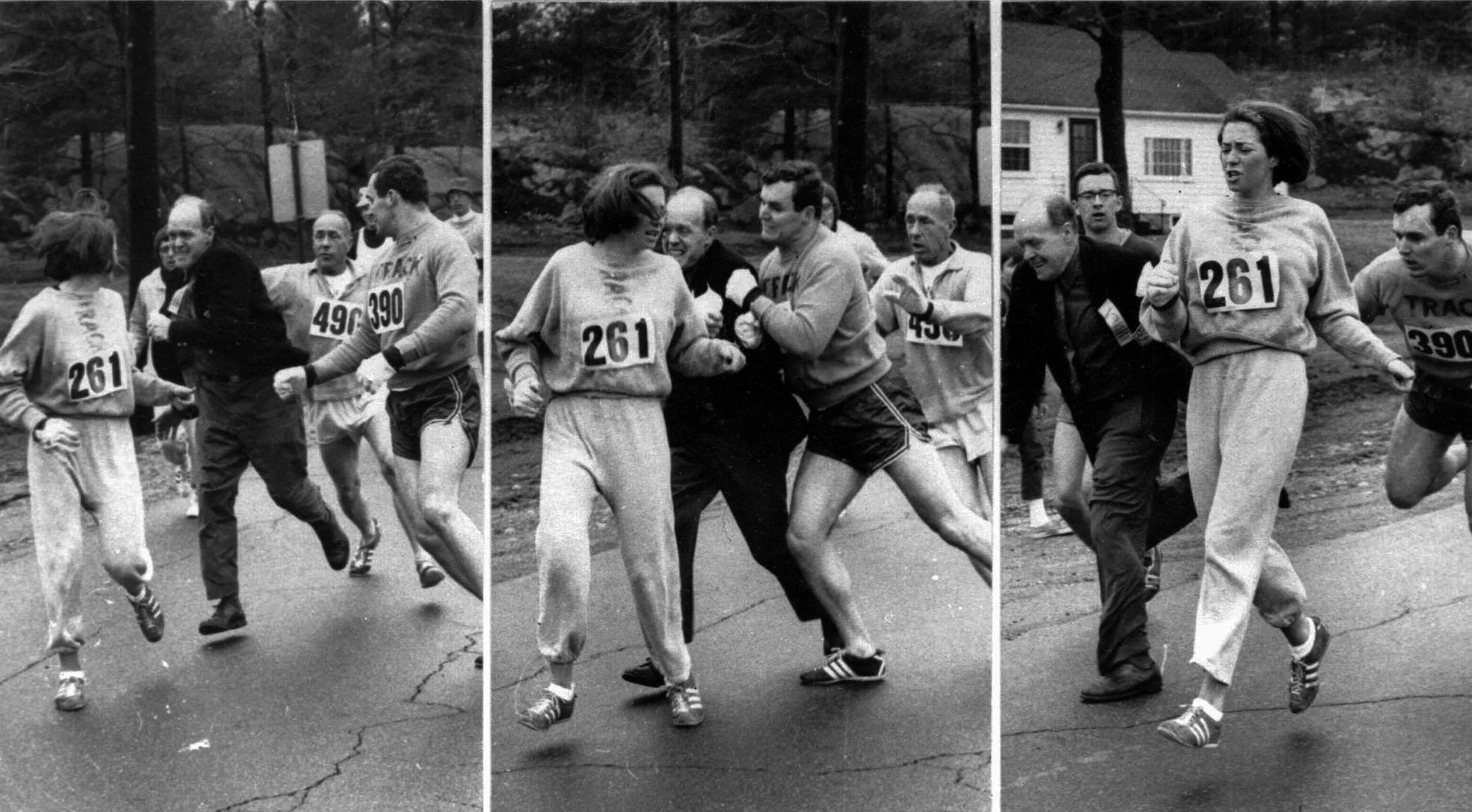
Kathrine Switzer at the 1967 Boston Marathon. Photo Credit: Boston Globe/261 Fearless
In 1967, Boston Marathon officials tried to pull Kathrine Switzer off the course because it was believed that women were too fragile to run a marathon. She told us recently that "running is a form of activism for women because it demonstrates that women want and deserve to be free... and they have the strength to withstand the work that activism requires."
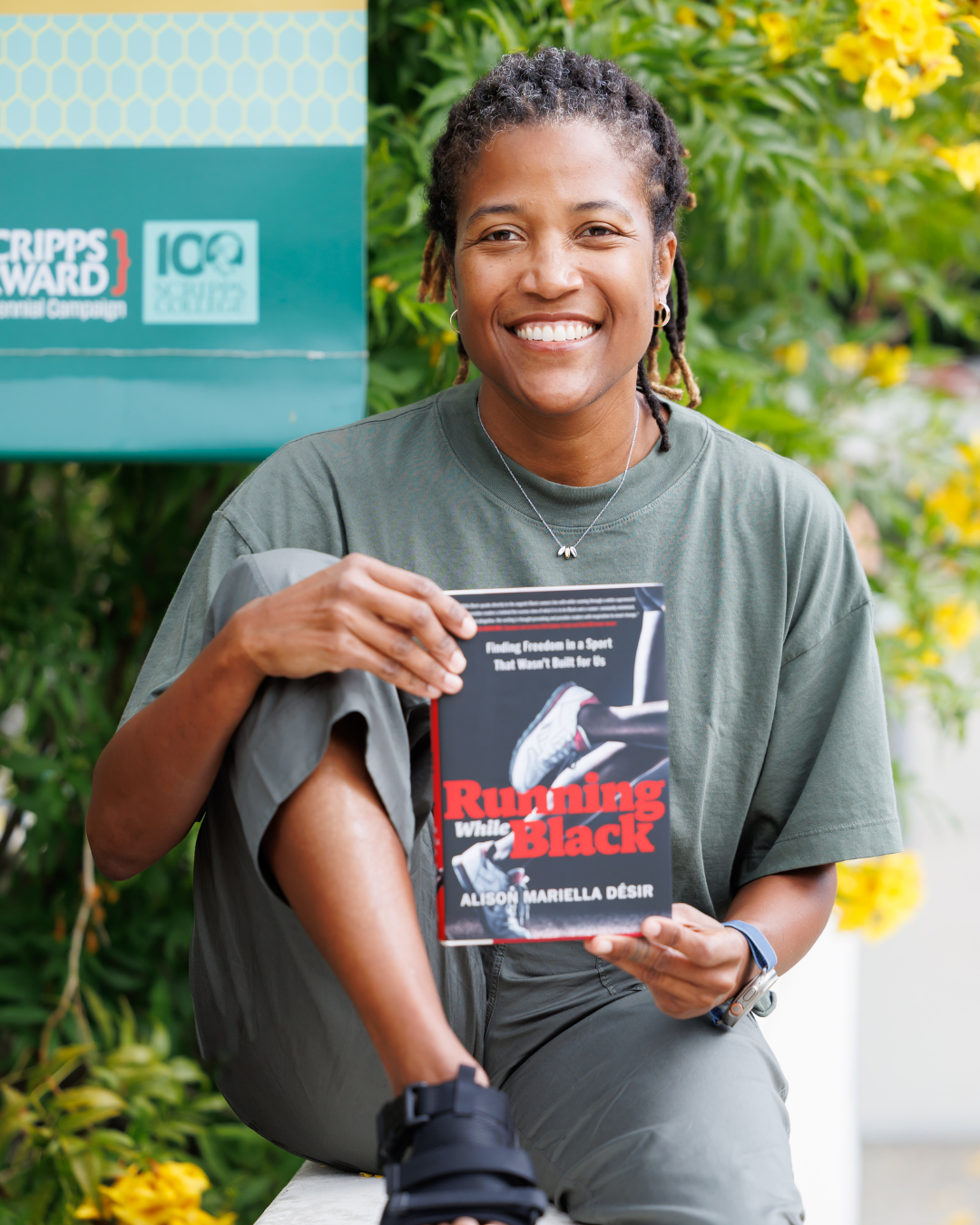
In New York, Alison Mariella Désir (above left) is co-founder and former chair of the Running Industry Diversity Coalition, and in 2017 she ran 250 miles from Harlem to Washington DC, raising more than $100,000 for Planned Parenthood. She founded Harlem Run to create a space where Black runners felt welcome. As Alison puts it, “These runners would never have to wonder if running was for them because we’d created a space that was.”
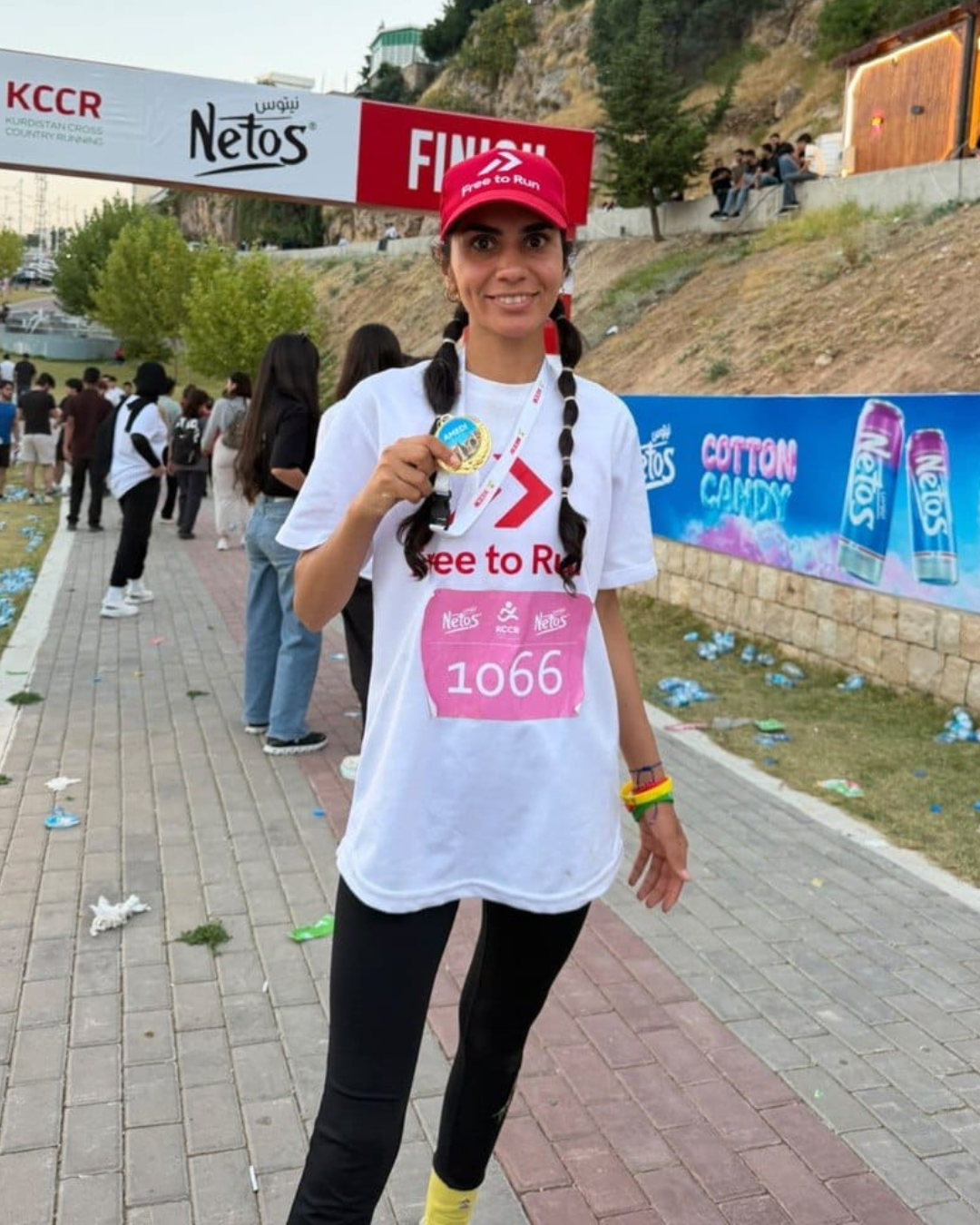
In Iraq, Free to Run participant Yasmin (above right) remembers people doubting that a girl could run 42 kilometers. Her family had reservations about her running too, but that changed after they met the Free to Run team. Today, nothing keeps Yasmin from her training and she is helping other girls in her community have the same support, having become a role model herself.
And just this month, Free to Run founder Stephanie Case set out to be the first woman to run 100 nonstop miles in Antarctica - a goal she achieved in 17 hours and 31 minutes in the coldest temperatures the race organizers have seen for the event. She set this goal to show girls, women, and mothers around the world what's possible - because they often aren't given the signs they need to believe that they belong in sport.
"It feels pretty amazing to put women on the map there, especially in a place that used to be called the womanless continent. I hope this shows everyone that motherhood isn't the finish line." - Stephanie Case
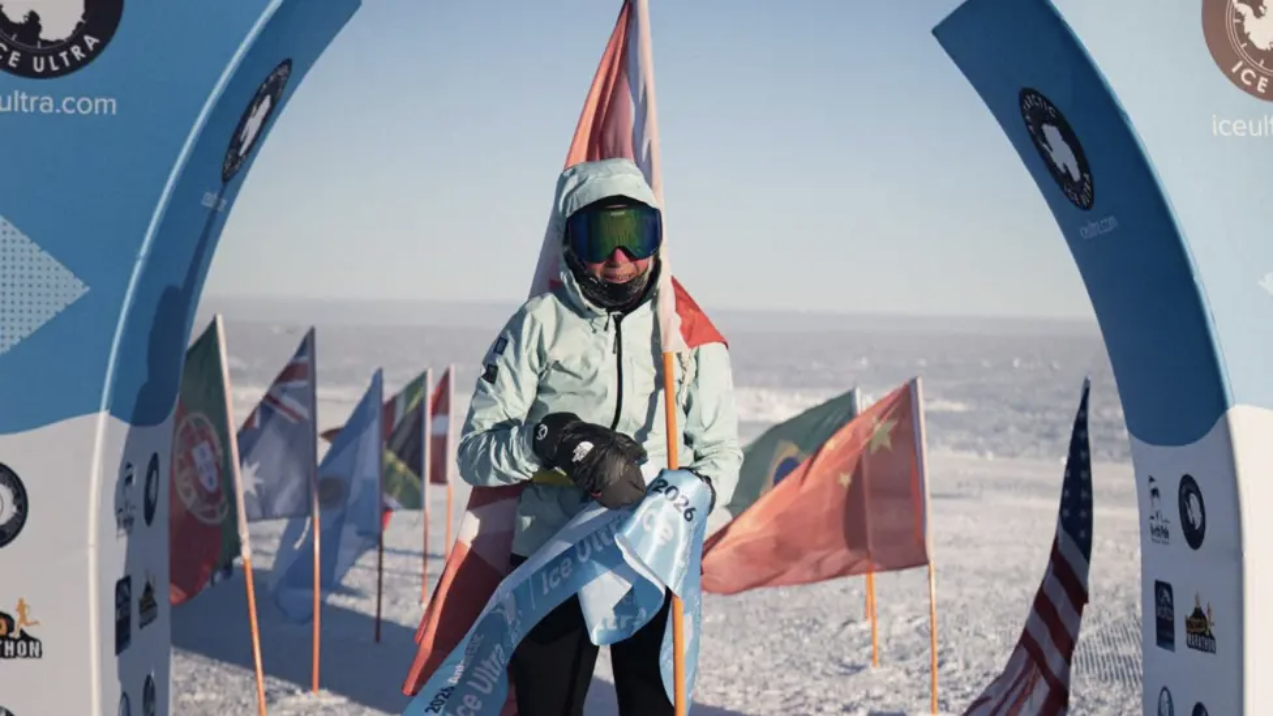
Free to Run Founder Stephanie Case finishes the Antarctic Ice Ultra. Photo Credit: Peak Pixel Cafe/The North Face